

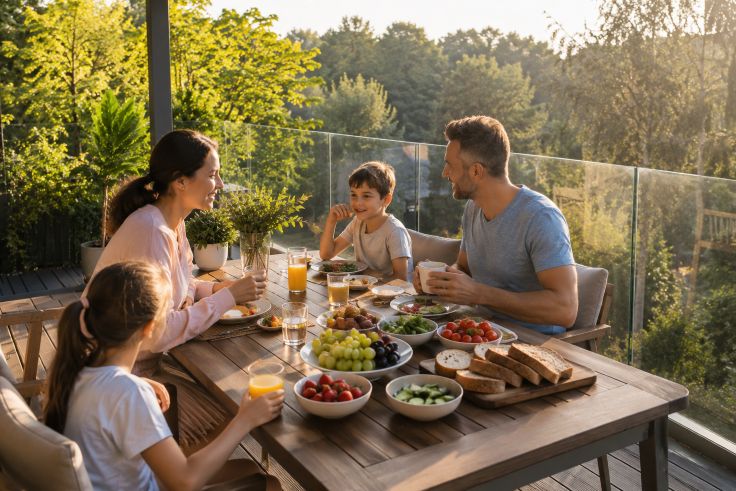
Eating environments can influence how people experience meals, from how quickly they eat to whether mealtimes become social occasions or rushed daily tasks. Research reviewed by the National Library of Medicine has linked exposure to natural environments with several aspects of physical and psychological wellbeing, while evidence on shared meals suggests that eating with others can contribute to social connection. Designing a comfortable outdoor dining area can bring these two everyday activities together: spending time outside and sitting down for a meal.
A garden deck or terrace can provide a dedicated place for breakfasts, lunches and family dinners while keeping people visually connected with their surroundings. Design choices such as comfortable seating, plants, shade and glass balustrades for decking can help create a secure dining environment without unnecessarily blocking views of greenery. Rather than treating a deck purely as an architectural feature, homeowners can design it as a space that supports healthier routines around food, relaxation and time outdoors.
1. Turn Outdoor Meals Into an Everyday Habit
Healthy eating is influenced by more than the food placed on a plate. The circumstances surrounding a meal can affect eating behaviour too. Research published in Appetite has examined how distractions, social settings and environmental cues can influence food intake and the experience of eating.
This makes the location of an outdoor dining area important. A deck positioned close to the kitchen reduces the effort involved in carrying plates, drinks and ingredients outside. If eating outdoors requires extensive preparation every time, the space may gradually become reserved for parties and special occasions instead of ordinary meals.
Simple access encourages routine use. Morning coffee, a bowl of fruit at breakfast or a family dinner can become reasons to leave the indoor dining room and spend additional time outside.
2. Create a Setting That Encourages Slower Meals
Eating quickly can make it harder to recognise signals of fullness. A systematic review and meta-analysis published in the International Journal of Obesity found that faster eating was associated with higher body mass index and greater risk of obesity, although observational findings do not prove that eating speed alone causes weight gain.
An inviting outdoor environment may provide a useful setting for more deliberate meals. Comfortable chairs, sufficient table space, greenery and protection from excessive sun or wind can make people more willing to remain seated rather than rushing back indoors. Other approaches to developing mindful eating habits, including using simple reminders to slow down and pay attention to the experience of eating, can complement a dining environment designed around relaxed, less distracted meals.
The objective is not to claim that a deck automatically changes someone’s diet. Instead, thoughtful design can remove some of the practical reasons people cut outdoor meals short and create conditions that are more compatible with relaxed eating.
3. Preserve the Connection With Greenery
Views matter when wellness is part of the design goal. A systematic review published in Environmental Research found associations between greater exposure to green space and several health outcomes, including reduced stress-related measures and lower risks for some chronic conditions. Researchers also noted differences in study quality and methodology, so individual benefits should not be overstated.
This is where the choice of deck boundary can affect the experience of the space. Solid walls or visually heavy barriers may interrupt views toward trees, gardens and surrounding landscapes. Transparent glass guarding can provide necessary edge protection on suitable raised areas while allowing those views to remain part of the dining environment.
For someone sitting at the table, that can mean looking across a garden rather than directly at an opaque barrier. The practical safety function remains, but the visual relationship between the dining area and nature is less disrupted.
4. Bring Healthier Foods Into the Outdoor Setting
An outdoor dining area can also be connected physically with food growing at home. Herbs, salad leaves, tomatoes and other suitable edible plants can be grown in containers around decks and patios where conditions allow.
The Royal Horticultural Society explains that many vegetables can be grown successfully in containers, making food gardening possible even where conventional garden beds are unavailable. Herbs can be particularly convenient near outdoor cooking and dining areas because small amounts can be picked immediately before meals.
This does not mean a few pots will transform someone’s overall diet. They can, however, make fresh ingredients visible and accessible. A container of basil beside a dining area or salad leaves growing nearby creates a direct connection between gardening, food preparation and eating.
5. Make Daylight Part of the Dining Routine
Breakfast and lunch outdoors can increase opportunities for daytime light exposure. Research involving UK Biobank participants and published in the Journal of Affective Disorders found that spending more time in outdoor daylight was associated with better mood and sleep-related outcomes.
A well-designed deck can make daytime outdoor activity easier because people do not need to plan a separate trip to a park or green space. Eating breakfast, reading after lunch or having tea outside simply becomes another way to use the home.
Shade remains essential for comfort and sensible sun protection. Umbrellas, pergolas and adjustable awnings can create a balance between daylight and shelter, particularly when a dining area receives strong direct sun.
6. Design for Social Meals, Not Just Entertaining
Shared meals can have value beyond nutrition. Research from the University of Oxford has explored associations between eating with others, social bonding and feelings of wellbeing. While social relationships are complex and cannot be reduced to where people eat, dining spaces can either make gathering easy or discourage it.
A practical outdoor table should therefore accommodate the people who normally use the home rather than being designed solely for occasional large gatherings. Enough room to move chairs, pass food and sit comfortably can make everyday family meals more appealing.
Transparent boundaries can contribute here as well. Keeping views open can make a protected deck feel connected with the rest of the garden, allowing people at the table to remain visually engaged with children playing, plants, pets or other activity nearby.
7. Reduce Visual Clutter and Support Relaxation
Wellness-focused outdoor design does not require filling every available space. Too much furniture, decoration or equipment can make a small deck difficult to navigate and maintain.
A simpler approach often works better. A dining table, comfortable seating, a few carefully chosen plants, appropriate lighting and an unobtrusive protective barrier may be enough. Where transparent panels are suitable, they can define the deck’s perimeter without adding a large visual obstruction.
That sense of openness can be especially useful on smaller terraces where bulky boundaries may make the usable area appear more enclosed.
8. Build a Space That Works Beyond Mealtimes
A wellness-oriented deck does not have to serve one purpose. The same table used for dinner might become a place for morning coffee, reading, conversation or quiet time later in the day.
Weather-resistant furniture, evening lighting and appropriate shelter can extend how frequently the area is used. Safe guarding is particularly important on elevated decks, and any installation should comply with applicable building requirements regarding structural safety, glazing and protection from falls.
Connecting Food, Nature and Everyday Wellbeing
Healthy living rarely depends on one dramatic change. More often, it develops through environments that make beneficial routines easier to maintain. An outdoor dining area can provide a setting where meals, daylight, greenery, gardening and social interaction naturally overlap.
Glass guarding can play a supporting role in that environment by providing protection around raised spaces while preserving visual access to gardens and surrounding scenery. Combined with shade, comfortable furniture, edible planting and convenient kitchen access, it can help a deck feel less like a separate structure and more like an open extension of the home’s living space.
The result is not a shortcut to better health or a healthier diet. It is something more practical: a home environment that gives people more opportunities to slow down over meals, spend time outside, connect with others and enjoy the natural setting around them.