

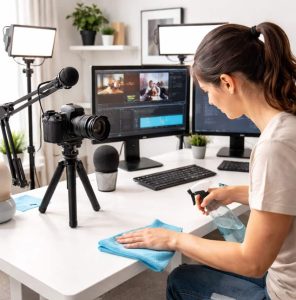
 Many people now use part of their home as a media workspace. This might be a YouTube studio, podcast setup, photography corner, or editing station. While working from home offers flexibility, it also brings a challenge that often gets overlooked: maintaining a clean and healthy environment.
Why Media Workspaces Get Dirty Faster
Media workspaces attract dust and debris more quickly than typical rooms. Cameras, microphones, lighting rigs, and tripods create many surfaces where dust can settle. Cables run across floors and behind desks. Soft materials such as acoustic panels, curtains, and foam insulation collect particles over time.
Lighting equipment also generates heat. Heat can pull dust into the air and push it toward electronics and surfaces. Over time, this can create a layer of fine dust that is hard to remove with simple wiping.
Another factor is frequent use. Content creators may record several times a week or even daily. Makeup products, props, packaging materials, and craft supplies often enter the workspace and leave small residues behind.
Even a well-organized studio can slowly accumulate hidden dirt in corners, behind furniture, and inside ventilation areas.
The Limits of Regular Cleaning
Standard home cleaning usually focuses on visible surfaces. Floors are vacuumed. Counters are wiped. Trash is removed.
But media spaces often have more complicated layouts. Equipment setups make it harder to reach certain areas. People may avoid cleaning behind lights or under desks because they worry about disturbing cables or damaging devices.
As a result, dust can settle behind equipment stands, inside shelves, and along baseboards. Air vents and ceiling corners may also collect particles that circulate back into the room.
For someone who records video or audio, this buildup can create practical problems. Dust on lenses or lights affects image quality. Dust inside microphones may interfere with sound clarity. And cluttered spaces make production harder to manage. Deep cleaning services help address these issues by going beyond surface-level cleaning.
What Deep Cleaning Services Include
Professional deep cleaning focuses on areas that are usually skipped during routine cleaning.
For homes used as media workspaces, services may include:
- Detailed dust removal from shelves, lighting mounts, and wall fixtures
- Cleaning baseboards, door frames, and trim
- Vacuuming upholstery, curtains, and acoustic materials
- Cleaning behind desks and furniture
- Sanitizing high-touch areas such as keyboards, switches, and handles
- Removing buildup from floors, corners, and under equipment stands
Some services also clean ventilation covers and ceiling fans. This helps reduce airborne dust that could affect electronics.
The goal is not just visual cleanliness. It is also about improving air quality and maintaining a safer environment for expensive equipment.
Protecting Media Equipment
Electronics are sensitive to dust. Small particles can collect inside vents and cooling fans. Over time, this buildup may cause overheating or reduced performance.
A cleaner environment helps extend the life of cameras, lighting systems, and computers. When a space is deep cleaned regularly, there is less loose dust circulating around equipment.
Professional cleaners are usually trained to work carefully around electronics. Many use microfiber cloths, soft brushes, and specialized vacuum attachments to reduce the risk of damage.
Still, it is important for homeowners to communicate clearly about which areas contain delicate gear. In some cases, equipment may need to be powered down or temporarily covered before cleaning begins.
Improving On-Camera Appearance
A clean workspace also improves how a set looks on camera. Viewers notice small details. Dusty shelves, smudged surfaces, or cluttered backgrounds can distract from the content being produced. Even if the camera does not capture everything directly, messy surroundings can affect lighting and overall presentation.
Deep cleaning helps maintain a polished background. Walls, shelves, floors, and decorative items all look sharper when they are properly maintained. For creators who record tutorials, interviews, or product reviews, a tidy environment supports a more professional appearance.
Health and Comfort
Working long hours in a dusty room is not ideal. Media creators often spend several hours editing, recording, or streaming in the same space.
Dust buildup can contribute to allergies, dry throat, or respiratory irritation. Soft materials like carpets and foam panels can hold allergens that gradually circulate in the air.
Deep cleaning removes these particles more effectively than regular cleaning. Vacuuming with high-efficiency filters and wiping surfaces thoroughly can reduce airborne irritants. A cleaner workspace tends to feel more comfortable and easier to focus in.
When to Schedule Deep Cleaning
Homes used as media workspaces do not always need frequent deep cleaning. The right schedule depends on how heavily the space is used.
For active content creators who record often, a deep cleaning every three to four months is usually reasonable. Spaces used less frequently may only require deep cleaning twice a year.
Some people also schedule deep cleaning before major projects. For example, before filming a course, hosting a livestream event, or setting up a new studio layout.
Regular light cleaning should still happen between deep cleanings. Simple tasks like dusting surfaces and vacuuming floors help maintain the workspace.
Choosing the Right Cleaning Service
Not every cleaning company is familiar with media setups. It helps to choose a service that is comfortable working around electronics and studio equipment.
When speaking with a provider, ask about:
- Their experience with home offices or studio spaces
- Cleaning methods used around electronics
- Whether they bring specialized tools for detailed dust removal
Clear communication helps prevent misunderstandings and protects valuable gear.
A Practical Investment
Deep cleaning services are sometimes seen as a luxury. But for homes used as media workspaces, they can be a practical part of maintaining the environment.
Cleaner spaces support better production quality, healthier air, and longer-lasting equipment. They also make it easier to stay organized and focused during creative work.
For content creators who spend many hours in their home studio, investing in occasional deep cleaning can make a noticeable difference in both comfort and performance.